





 November 16, 2026
The trouble with asking what to watch on Shudder is that the service can feel like a beautifully disreputable video-store basement. You went in for one haunted-house movie and emerged holding a Korean occult drama, a 1970s broadcast nightmare, and something involving a cursed bellhop. This is not a problem. It is the point.
Shudder is at its strongest when you stop treating it like a conveyor belt of scares and start treating it like a repertory theater with a bad electrical system. Its real gift is the conversation between old anxieties and new ones: folk belief beside institutional dread, witchcraft beside television, sad monsters beside the human beings who made them sad in the first place. Catalog availability changes, because streaming rights are the least romantic monster of all, but these picks make a fine route through the sort of spooky-warm programming Shudder does better than almost anybody.
What to watch on Shudder when you want folklore with teeth
Start with The Devil’s Bath (2024), directed by Veronika Franz and Severin Fiala. This is historical horror with mud on its hem and a profound lack of interest in giving you easy catharsis. Set in 1750s Austria and rooted in documented ideas about melancholy, faith, and crime, it has the density of a nightmare somebody tried to record in a parish ledger.
Franz and Fiala understand that folklore is not merely a supply closet full of creepy symbols. It is a system people once used to explain pain, sin, illness, and the frightening randomness of survival. That makes The Devil’s Bath an especially good choice if your favorite old horror films are the ones where the monster is partly a social arrangement – a village, a family, a church, a custom nobody has thought to question.
Pair it with Exhuma (2024), Jang Jae-hyun’s richly textured Korean supernatural film. Where The Devil’s Bath sits in a cold European gray, Exhuma is full of earth, ritual, inherited history, and spiritual labor. Its shamanic practices are not decorative set dressing pasted onto a familiar Hollywood ghost story. The film gives them weight, rhythm, and consequence.
That distinction matters. Too many modern horror movies treat folklore as a box labeled “ancient evil,” to be opened by the least observant person in the room. Exhuma is interested in how belief lives in bodies, families, landscapes, and national memory. It is a big, strange, deeply satisfying piece of popular horror cinema – the kind that leaves you wanting to read about burial customs rather than merely sleep with a hallway light on.
Why this pairing works
Together, these films make a case for horror as cultural memory. Neither is cozy, exactly. Cozy is not the same thing as safe, and our candlelit little corner of the genre knows better. But both reward viewers who want more than a curse with a user manual. They ask what a community does when its explanations for suffering become another form of suffering.
The modern Gothic double feature: Oddity and The Autopsy of Jane Doe
For a dark winter night, put Oddity (2024) on the bill with The Autopsy of Jane Doe (2016). Both understand a principle that old haunted-house pictures knew by heart: a confined setting is not a limitation if the atmosphere is doing its job. Give us a lonely building, a few rooms that seem to be listening, and one object that ought to be under glass at a museum rather than in anyone’s home. We are seated.
Damian Mc Carthy’s Oddity is a fine modern example of Irish Gothic restraint. It does not confuse volume with fear. Instead, it builds unease out of stillness, domestic grief, and the uncomfortable feeling that the room has acquired another occupant. Its most memorable image has the blunt, handmade authority of a piece of carnival folklore – the sort of thing you might spot at the edge of a drive-in poster and spend 40 years trying to identify.
The Autopsy of Jane Doe, directed by André Øvredal, has a more overtly old-school premise, but its sensibility is admirably patient. It turns professional routine into a séance. Horror has always loved institutions that promise rational order: laboratories, hospitals, police stations, military bases, universities with suspiciously underfunded basements. Put the impossible inside one, and watch certainty start to peel.
Neither film needs an overstuffed mythology to make an impression. That is worth celebrating. A lot of contemporary horror behaves as if every eerie incident must become a franchise genealogy chart. Sometimes a locked room, a grieving person, and a deeply unwelcome artifact will do the job nicely. Boris Karloff did not need an app to explain the lightning.
For the horror historian: Late Night with the Devil
Late Night with the Devil (2024) is the Shudder pick for anyone who hears “1977 television special” and immediately sits up straighter. Written and directed by Cameron and Colin Cairnes, it captures the shabby glamour of late-night broadcast culture: network ambition, variety-show weirdness, occult fascination, and the particular loneliness of a host who cannot tolerate dead air.
The important thing is not that the film wears its period costume well, though it does. It understands why the 1970s remain such fertile soil for horror. American television was becoming more intimate and more commercial at the same time. It entered the home as a companion, a babysitter, a salesman, and occasionally a weird uncle with sideburns. The era’s occult boom fed on that intimacy. A paranormal event on television did not just threaten the people in the studio. It threatened the audience’s trust in the box glowing in the corner.
That is a very old horror idea wearing a polyester jacket. Think of the medium itself as the monster: the phonograph, the radio, the camera, the television. Each new technology has eventually been accused of letting something undesirable through. Usually critics mean teenagers. Horror means ghosts.
Do not skip The Last Drive-In
If you are frozen by choice paralysis, the most useful answer to what to watch on Shudder may be The Last Drive-In with Joe Bob Briggs. Not because Joe Bob will politely tell you what to think about every movie – perish the thought – but because the show restores a lost way of watching.
Drive-in and late-night horror culture was never built on pristine consensus. It was built on introductions, interruptions, trivia, arguments, regional oddities, and the pleasure of being told that a peculiar little film has a history. Joe Bob’s commentary can move from production minutiae to social context to a joke sharp enough to leave a small dent in the wallpaper. That blend is valuable whether the feature is a canonical classic, a scrappy regional production, or a creature feature held together by spirit gum and divine mercy.
For monster fans, it also offers a corrective to the algorithm’s worst habit: treating all horror as interchangeable content. It isn’t. A 1930s Universal picture, a 1950s atomic panic movie, a rural folk nightmare, and a bargain-bin splatter comedy may share a shelf, but they are responding to different fears and different audiences. Context makes the shelf more fun.
Build your Shudder night around a mood, not a ranking
The better question is not “What is the scariest thing on Shudder?” Scary is slippery. One viewer wants a ghost at the end of the hall. Another wants an anxious folk ritual, a sad werewolf, or a black-and-white scientist making ethical choices with the confidence of a man who has never met consequences.
Choose The Devil’s Bath or Exhuma when you want horror tied to history and belief. Choose Oddity or The Autopsy of Jane Doe when the weather outside calls for a locked door and a hot drink. Choose Late Night with the Devil when you want a clever artifact from a television timeline that almost existed. Put on The Last Drive-In when you want company along the way.
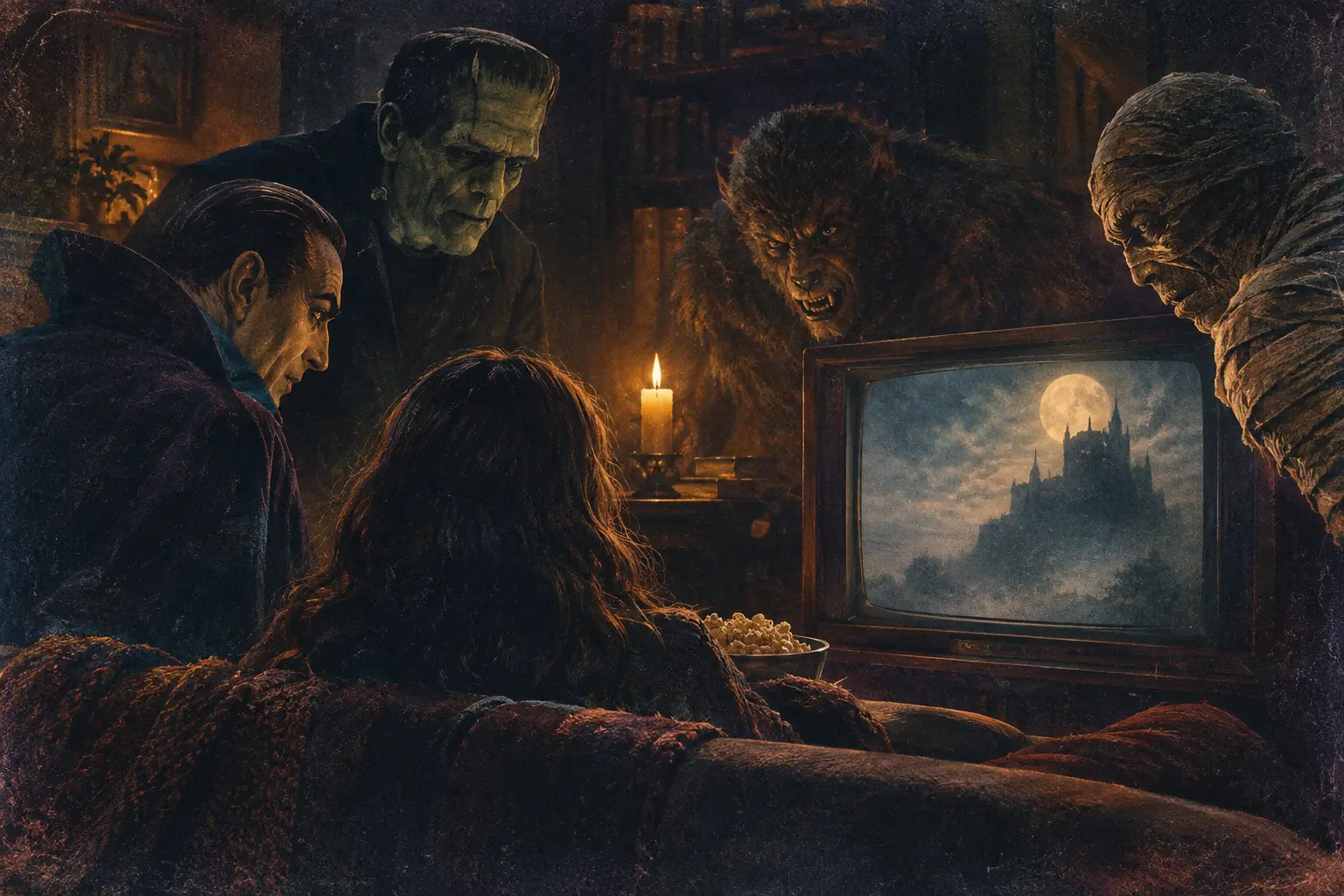
Then leave room for the title Shudder recommends after that. The strange little detour is often where the good stuff lives. Bring a blanket, keep the lamp low, and let the monsters introduce themselves.


 Prev Post

What do you think?
Show comments / Leave a comment