





 October 26, 2026
A blue police box lands in a junkyard in 1963, and more than six decades later, new viewers are still asking where the heck to board. Fair question. How to start watching Doctor Who is less like choosing a pilot episode and more like entering a vast, slightly haunted library where every room has a different wallpaper budget. The good news is that the show itself has built in escape hatches.
Doctor Who is not one unbroken story you must study before you are allowed to enjoy it. It is a traveling cabinet of curiosities: comedy, grief, gothic horror, space opera, historical drama, rubber monsters, moral panic, and occasionally a man in a very long scarf being menaced by something that looks like it escaped a school craft fair. That variety is the point.
The easiest way to start watching Doctor Who
For most first-time viewers, begin with “Rose” (2005), the first episode of the revived series starring Christopher Eccleston as the Ninth Doctor. It was deliberately made as a doorway. Russell T Davies and his team knew that the program had been off regular television since 1989, aside from the 1996 TV movie, and they rebuilt the premise around a new companion discovering this strange universe alongside you.
It is not the slickest episode the franchise ever made. That is not a warning so much as an invitation. Doctor Who has always worn its imagination on the outside, sometimes with visible staples. “Rose” gives you the emotional engine of the show quickly: an ordinary life, an impossible invitation, and a traveler who can make the universe feel huge and intimate in the same scene.
From there, watch in order through the 2005 revival. That route gives you a clear progression through Eccleston, David Tennant, Matt Smith, Peter Capaldi, Jodie Whittaker, and then the newer era led by Ncuti Gatwa. You will meet returning villains and hear old names, but the show generally explains what you need when you need it. Doctor Who lore is a spice cabinet, not an entrance exam.
A small scheduling warning from the time vortex: the revived show originally called its runs “Series 1,” “Series 2,” and so on. The 2024 Gatwa era was again labeled “Season 1.” This is not a secret test. It is just television branding doing what television branding does best: throwing a scarf over a numbering problem and hoping nobody notices.
Three starting doors, depending on your taste
“Rose” is the sensible default, but it is not the only honorable choice. The right starting point depends on what kind of genre fan you are.
If you want a fresh modern entry, start with “The Church on Ruby Road” (2023) and continue into the 2024 season. Ncuti Gatwa brings a bright, emotionally open energy, and the episode introduces Ruby Sunday as a companion. This path is especially friendly if you want contemporary pacing, a clean visual palette, and a shorter runway before reaching current conversation.
If you want the classic show’s spooky-warm flavor, start with “Spearhead from Space” (1970), Jon Pertwee’s first story as the Third Doctor. It is the first Doctor Who serial made in color, it introduces the Doctor’s Earth-bound era with UNIT, and it has a pleasing Atomic Age invasion-movie texture. Pertwee’s Doctor is elegant, impatient, and very capable of making a cape look like laboratory equipment. From there, sample rather than march mechanically through every serial.
If you want the most archetypal gothic Doctor Who, begin with “The Ark in Space” (1975) or “The Horror of Fang Rock” (1977) from Tom Baker’s Fourth Doctor era. Baker is the image many people carry in their heads when they hear “classic Doctor Who”: wild eyes, impossible scarf, alien mischief, real melancholy underneath. These stories show why the program belongs so naturally beside old creature features and British ghost stories. The effects may wobble. The atmosphere does not.
And if you are a completist with a historian’s itch, start at the actual beginning: “An Unearthly Child” (1963) with William Hartnell. Its first episode remains a marvelous piece of eerie television, all foggy London lanes, suspicious schoolteachers, and a police box that should not be bigger on the inside. Just know that 1960s Doctor Who was made as serialized family television, often in four or more installments. It rewards patience, but it is not the route to take if you are already worried the show might feel old.
Do not start with the lore homework
The internet has done a peculiar thing to Doctor Who: it has made a show about curiosity feel intimidating. You do not need a chart of Gallifreyan history. You do not need to understand regenerations, Time Lords, the Daleks, UNIT, or why several versions of the same person occasionally appear in one room looking profoundly tired.
The central idea is simple. The Doctor is an alien traveler who moves through time and space in the TARDIS, usually with human companions. When the lead actor changes, the Doctor regenerates into a new face and a new personality. That ingenious bit of 1966 storytelling pragmatism is why a series that began with Hartnell can keep changing without pretending it has not changed. Few franchises turn recasting into mythology this gracefully.
Continuity matters most after you care. A returning monster has more flavor if you recognize it, certainly, but the show is usually better at emotional callbacks than trivia quizzes. Let the references pass over you at first. Someday you will hear a familiar sound effect, recognize a battered villain from 1975, and feel like you have found a secret passage in a favorite old movie palace.
Use standalone episodes as samples, not your foundation
You will see certain episodes recommended constantly, especially “Blink” (2007). It is deservedly famous, clever, and creepy enough to make statues feel rude. But it is not the ideal first episode for everyone because it is an unusual Doctor Who story, built around a guest-focused structure and a very particular kind of fear.
Treat celebrated standalones as dessert. Watch “Blink” after a little time with the Ninth or Tenth Doctor, when you understand the show’s basic rhythm. The same goes for “Vincent and the Doctor” (2010), “The Doctor’s Wife” (2011), and “Heaven Sent” (2015). These are richer when you have spent enough time in the TARDIS to know what its people mean to one another.
If an early episode fails to charm you, keep going. Every Doctor Who era has tonal experiments, budget constraints, and one or two creatures that make you wonder whether the props department was paid in leftover Christmas tinsel. That is not failure. It is part of the house style. Still, you are not obligated to become a martyr for an episode you dislike. Skip ahead, try another Doctor, or change centuries.
Watch it like a serial, not a syllabus
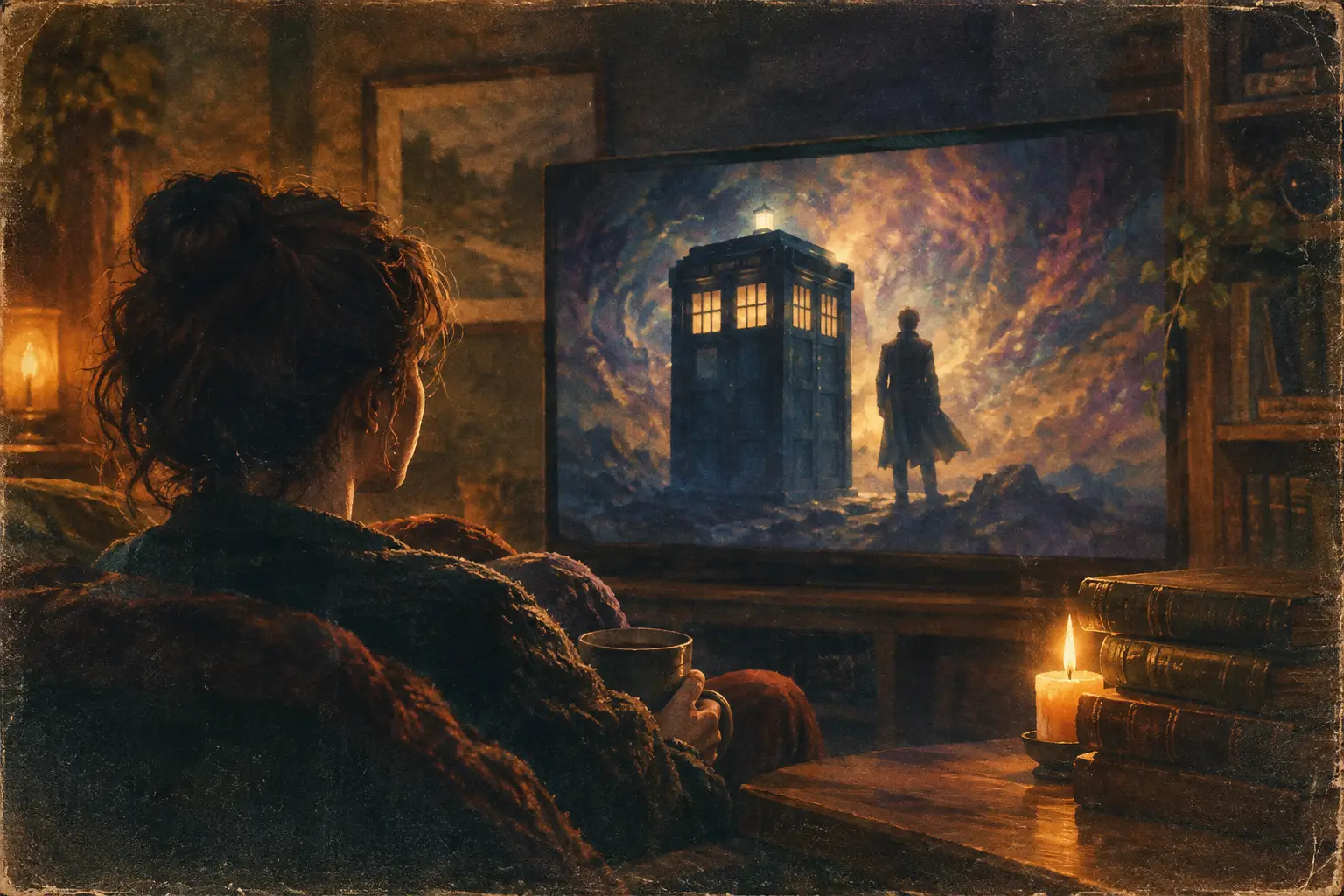
Doctor Who works beautifully as a ritual. One or two episodes on a dark evening gives its strange little worlds room to linger. The classic serials are particularly good with a cup of tea, a blanket, and the understanding that cliffhangers were once designed to send children behind the sofa before dinner.
The modern series can invite a faster binge, but resist turning every season into background noise. The companions matter because the show lets us see the Doctor through them. Give major exits, arrivals, and season finales a little breathing room. This is adventure television, yes, but it has always had the soul of a ghost story told by a fire: the scares are sharper because somebody is listening.
There is also no shame in choosing your Doctor first and roaming outward. If Tennant’s theatrical romanticism grabs you, stay there. If Capaldi’s severe, wounded professor energy feels more like home, start with “Deep Breath” (2014) and circle back later. If Whittaker’s generous, team-centered Doctor interests you, begin with “The Woman Who Fell to Earth” (2018). The franchise is designed to survive this kind of affectionate rule-breaking.
Start with “Rose” if you want the cleanest road, or choose the doorway that matches your favorite flavor of sci-fi. Then let the show surprise you. Somewhere between the cardboard corridors, the cosmic terror, the terrible puns, and the sudden sincere ache of it all, Doctor Who stops being a very large television program and becomes a place you visit.


 Prev Post

What do you think?
Show comments / Leave a comment