





 March 1, 2026
Spring feels honest.
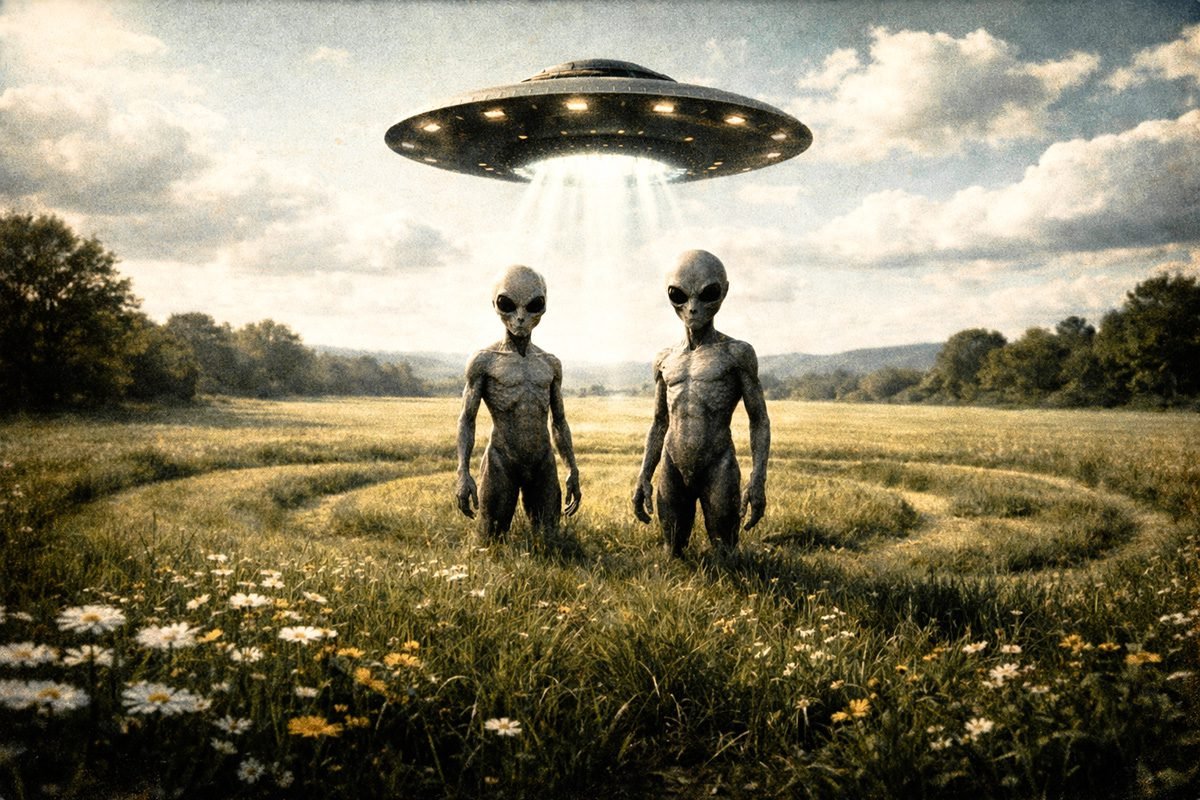
The sky opens up. The fields stretch wide. The light lingers longer each evening. After winter’s suffocating darkness, everything feels exposed.
And that’s exactly why sci-fi horror loves it.
When we think of horror, we imagine shadow. But alien horror often thrives in daylight, in wide, empty farmland, beneath vast blue skies, in neighborhoods that look perfectly ordinary.
Because nothing is more unsettling than realizing something is wrong… in broad daylight.
Welcome to the strange seasonal psychology behind sci-fi horror movies that unfold in open skies and blooming landscapes.
Why Spring Is Perfect for Alien Horror
Spring symbolizes renewal, growth, and clarity. Crops return. Communities gather. Life moves outward again.
Alien horror disrupts that safety.
Open skies remove hiding places. Wide fields create visibility. Yet paradoxically, that visibility creates vulnerability.
There is nowhere to hide.
Alien horror in spring settings often leans into:
• Isolation in plain sight
• Paranoia in normalcy
• Invasion without shadows
• Familiar spaces turned uncertain
It is not the dark forest that frightens us. It is the sunny cornfield.
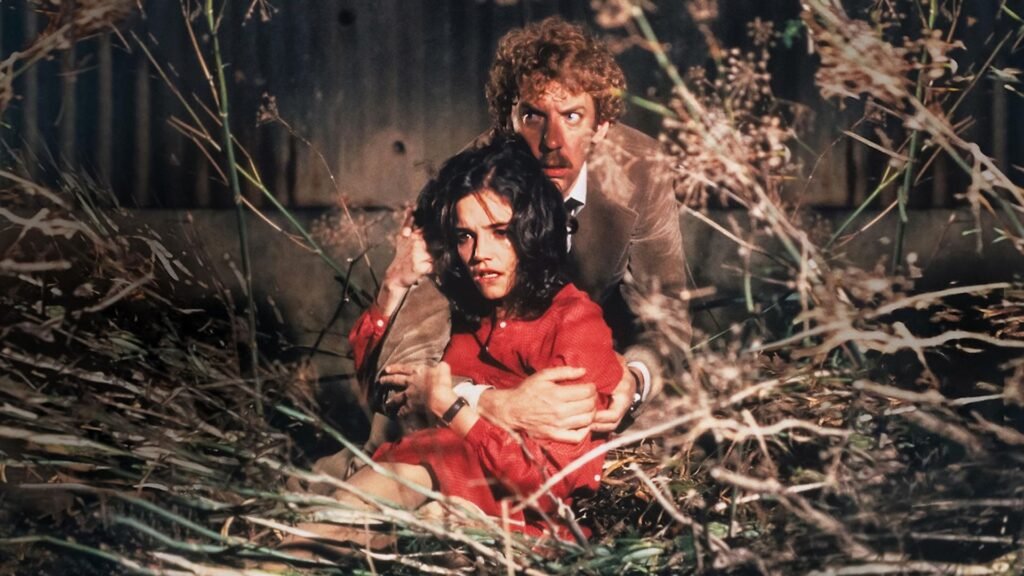
Invasion of the Body Snatchers — Paranoia in Perfect Weather
Few alien invasion films capture rural daylight dread like the 1956 classic Invasion of the Body Snatchers.
Set in small-town California, the horror unfolds under clear skies. Neighbors smile. Gardens bloom. Yet something is replacing people quietly.
Spring landscapes become sinister because they are so normal.
The film’s power lies in contrast:
Bright streets.
Calm conversations.
Emotionless doubles.
The invasion does not announce itself. It blends in.
That tension between renewal and replacement makes spring the ideal backdrop.
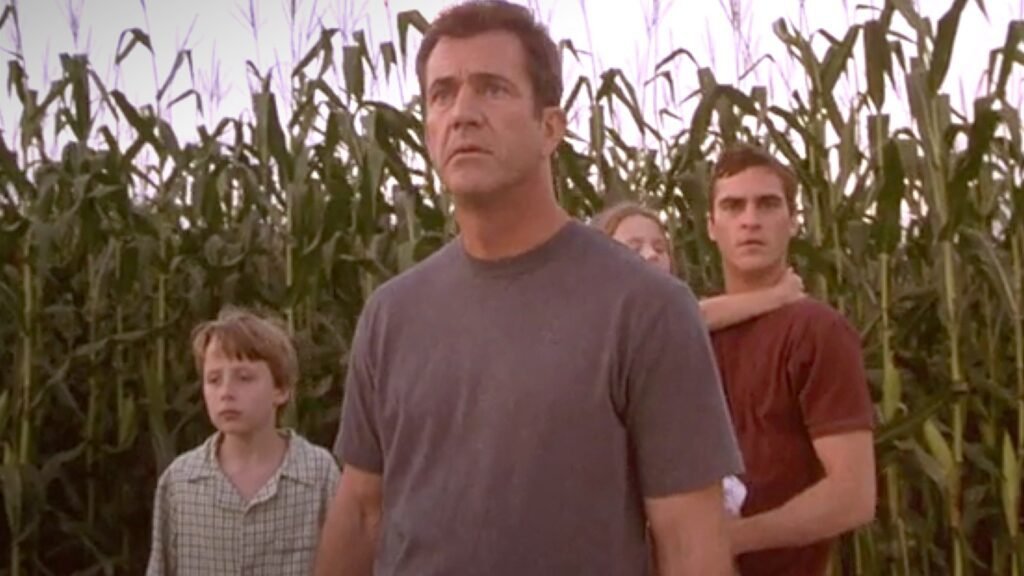
Signs — Open Fields, Open Fear
M. Night Shyamalan’s Signs uses rural farmland as a canvas for extraterrestrial anxiety.
Cornfields in daylight become claustrophobic. The sky feels too large. The farmhouse feels too small.
Spring imagery — crops rising, family routines returning — becomes a reminder of fragility.
The aliens are rarely seen clearly. But their presence transforms ordinary daylight into something charged.
The scariest scene does not happen at night.
It happens at a birthday party… under the sun.
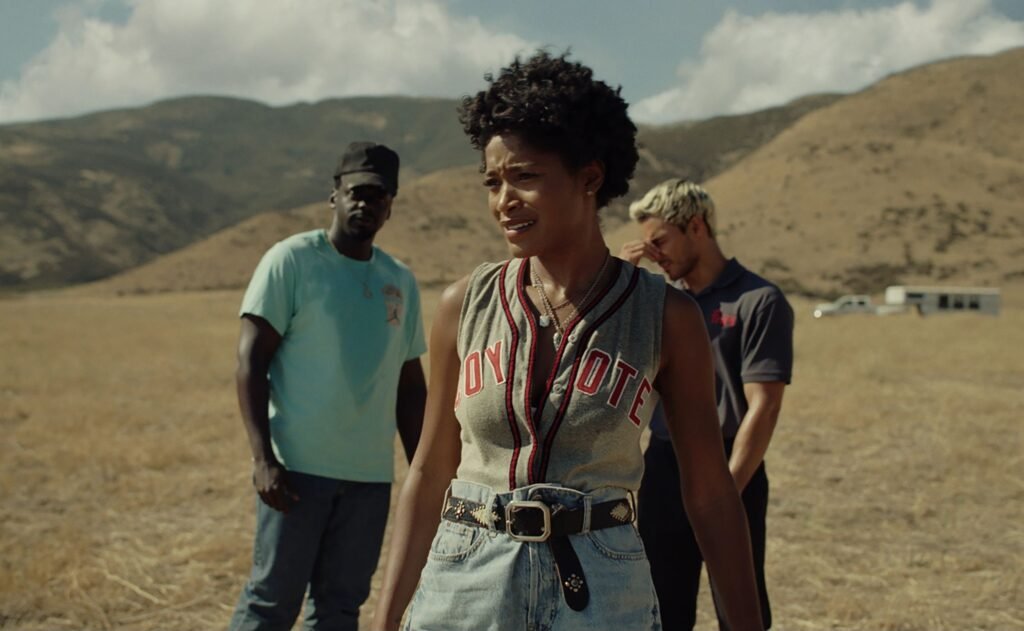
Nope — The Sky as Predator
Jordan Peele’s Nope flips the alien genre on its head by turning the sky itself into a hunting ground.
Set against expansive California ranch land, the film emphasizes openness. Horses roam. Clouds drift.
Then the clouds start behaving strangely.
Spring skies feel infinite. But what if infinity is watching back?
Nope understands that alien horror in daylight creates a different type of dread:
You cannot blame shadows.
You cannot blame darkness.
You can only blame the sky.
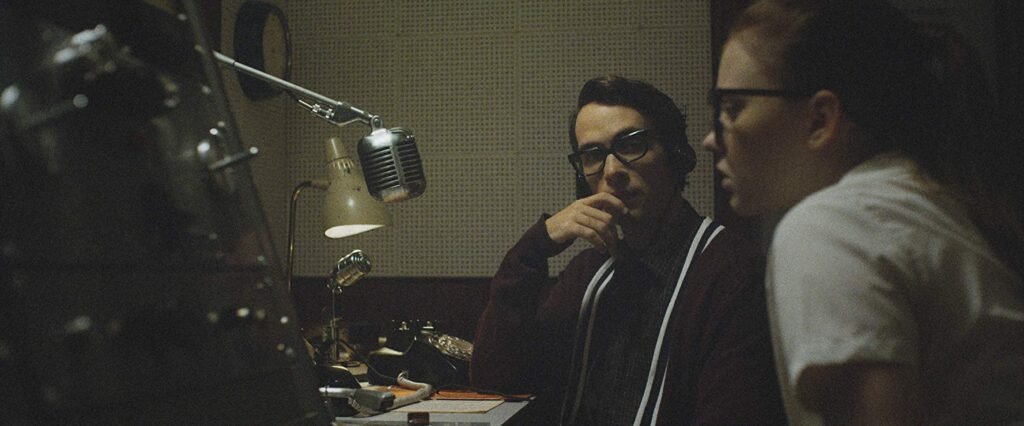
The Vast of Night — Small Town, Big Unknown
Set in 1950s New Mexico, The Vast of Night captures the nostalgic optimism of mid-century America — radios buzzing, teenagers flirting, the future feeling bright.
Then strange frequencies begin.
Though much of the film unfolds at night, its emotional landscape is pure spring: hope colliding with the unknown.
The open desert amplifies isolation. The sky feels limitless.
And somewhere beyond it, something listens.
Why Alien Horror Prefers Open Landscapes
Let’s break this down psychologically and cinematically.
1. Open Space Creates Vulnerability
Urban horror uses confinement. Alien horror uses exposure. A cornfield looks safe — until you realize how easily something could land in it.
2. Daylight Removes Visual Excuses
In darkness, fear is understandable.
In daylight, fear feels irrational.
That tension makes it more powerful.
3. Rural Settings Emphasize Isolation
Alien horror frequently takes place in:
Small towns
Farmland
Desert highways
Remote ranches
Why?
Because these locations sit between civilization and wilderness — perfect liminal zones for invasion.
Spring Alien Horror vs Winter Alien Horror
Winter alien horror, like The Thing, thrives on isolation and cold.
Spring alien horror thrives on:
Disruption
Replacement
Expansion
Infiltration
Winter says: you are alone.
Spring says: something is joining you.
And it may not be friendly.
The Deeper Fear: Loss of Familiarity
At its core, alien horror in spring landscapes taps into one primal anxiety:
What if everything looks the same… but isn’t?
Spring signals normalcy. School resumes. Gardens grow. Families gather outdoors.
Alien horror corrupts that comfort.
It turns:
Blue skies into surveillance
Fields into landing zones
Neighbors into strangers
It suggests the universe is closer than we think.
Why This Subgenre Resonates Right Now
In a hyperconnected world, the idea of silent infiltration feels relevant.
We live in an era of:
Invisible algorithms
Misinformation
Digital doubles
Identity confusion
Alien horror has always been metaphorical.
Spring alien films specifically capture:
Fear of replacement
Fear of technological expansion
Fear of losing community cohesion
The wide sky becomes a symbol of overwhelming possibility — and threat.
If You Want a Spring Sci-Fi Horror Watchlist
Add these to your March queue:
Invasion of the Body Snatchers
Signs
Nope
The Vast of Night
War of the Worlds
Watch them on bright afternoons. Let the sky linger overhead.
Notice how comfort turns uneasy.
Final Thought: The Sky Is Not Empty
Spring gives us openness. Light. Air.
Sci-fi horror asks:
What if openness invites observation?
Alien films set in fields and suburbs remind us that invasion does not always come through the door.
Sometimes it drifts down slowly, silently, through clear blue sky.
And sometimes the scariest place to stand… is in the sunlight.


 Prev Post
What do you think?
Show comments / Leave a comment