





 February 23, 2026
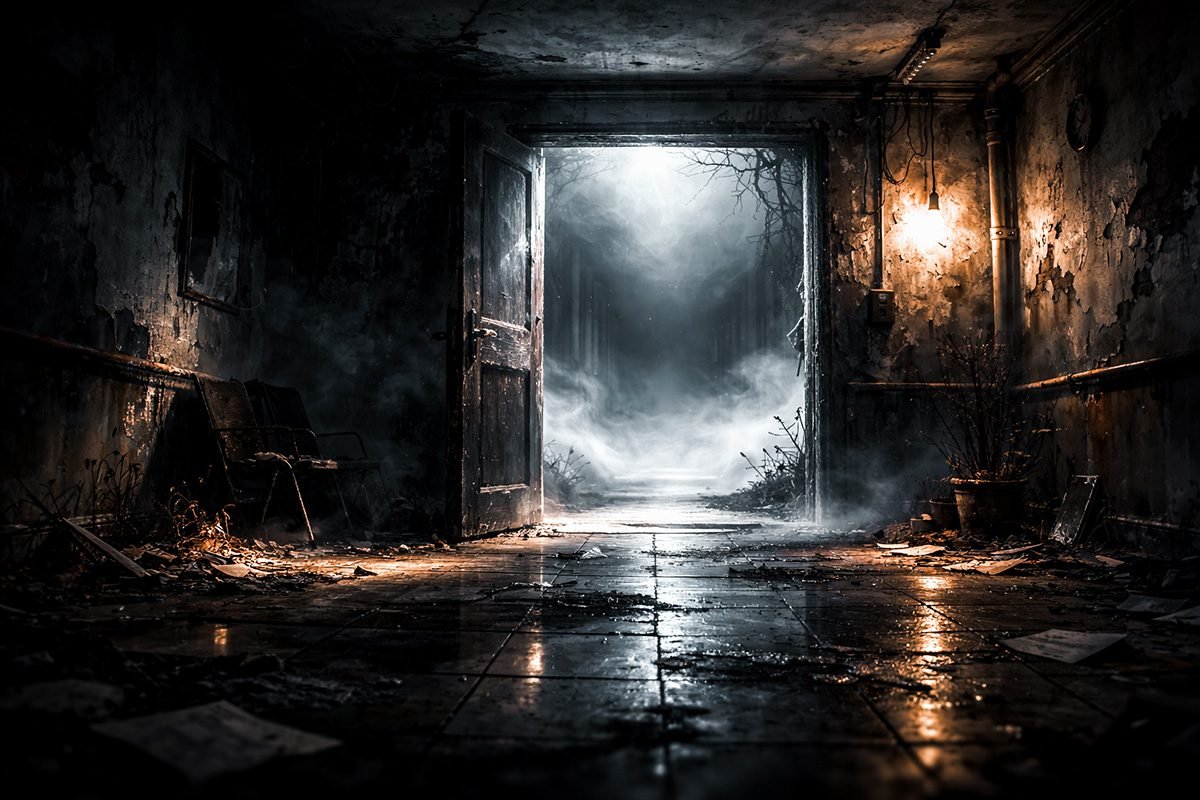
There is a hallway in your childhood home that feels longer at night.
There is a parking lot at dusk that feels unfinished.
There is an airport at 3 a.m. that feels like time has forgotten it.
Nothing is wrong. And yet something is deeply, quietly off.
That feeling has a name.
It’s called liminality — and horror has been obsessed with it for decades.
Welcome to the strange and beautifully unsettling world of liminal horror, where the monster is not always a creature… but a space caught between states.
What Does “Liminal” Mean?
The word liminal comes from the Latin limen, meaning threshold.
A liminal space is:
A transition point
A boundary
A place between one state and another
Examples in real life:
Hallways
Stairwells
Empty schools after hours
Waiting rooms
Airports
Abandoned malls
Dusk
Late winter
Childhood
Liminal spaces are not destinations. They are passages.
And horror thrives in passages.
What Is Liminal Horror?
Liminal horror is a subgenre that focuses on fear created by in-between spaces, transitions, and psychological thresholds rather than direct confrontation with a visible threat.
Instead of:
- Jump scares
- Graphic violence
- Loud monsters
You get:
- Empty architecture
- Silence
- Spatial distortion
- Isolation
• Subtle wrongness
The fear doesn’t come from attack.
It comes from displacement.
Why In-Between Spaces Terrify Us
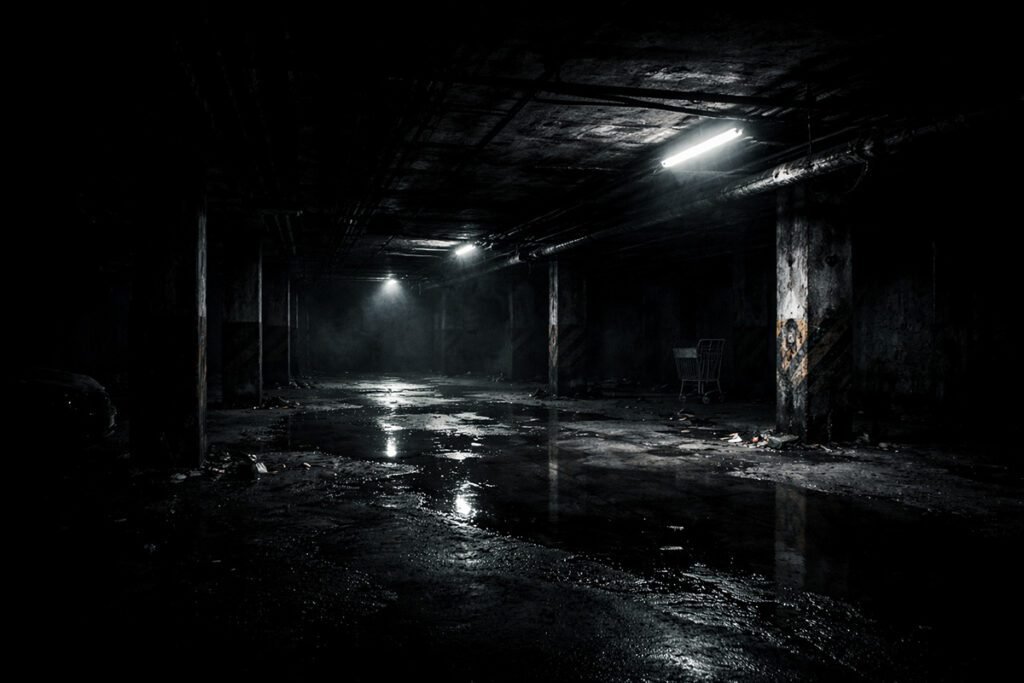
Liminal horror unsettles us because transitional spaces remove certainty.
They are:
Not fully safe
Not fully dangerous
Not fully real
Not fully imagined
Your brain struggles to categorize them.
And when the brain cannot categorize something, it fills the gap with dread.
Psychologically, liminal spaces activate:
Fear of abandonment
Fear of stagnation
Fear of loss of control
Fear of identity shift
They ask:
What if you are stuck between who you were and who you are becoming?
That is existential horror.
Hallways, Hotels, and Empty Rooms: Architecture as Anxiety
Liminal horror often uses architecture as an emotional metaphor.
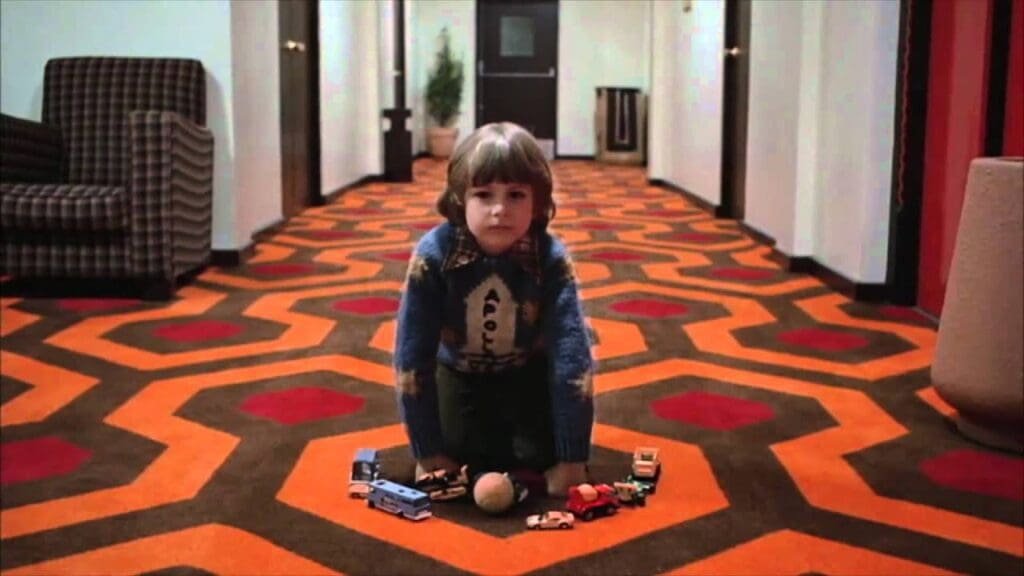
The Shining
The Overlook Hotel is a masterpiece of liminality. Endless corridors. Impossible geometry. A place between civilization and wilderness.
It is not simply haunted.
It is suspended.
The characters are cut off from the world, trapped in a transitional state — snowed in, psychologically unraveling, suspended between sanity and madness.
The horror is spatial disorientation.
Skinamarink
Few films embody liminal horror more completely than Skinamarink. Long static shots of ceilings, corners, doorways. Dialogue barely audible. Parents missing.
The house becomes a non-place — familiar yet wrong.
This is childhood liminality: the fear of waking up and realizing the adults are gone.
It Follows
Suburban streets feel empty. Time feels ambiguous. Seasons blur.
The monster moves slowly, deliberately. It does not rush. It crosses space.
The true fear is inevitability — being caught in the threshold between safety and doom.
Liminal Horror and Digital Spaces
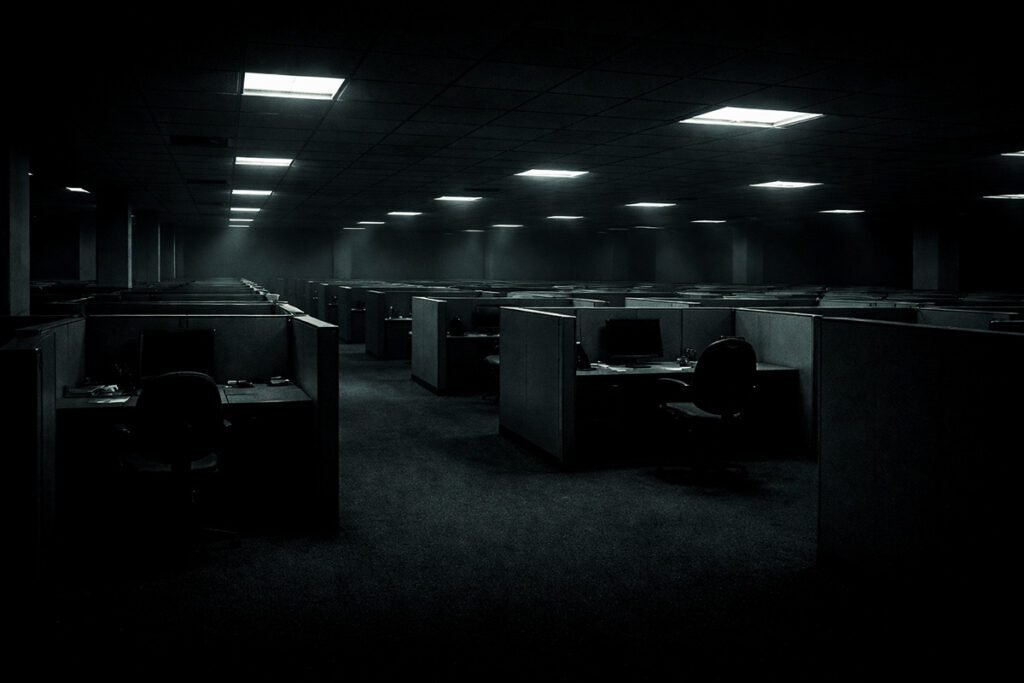
The internet has amplified liminal aesthetics dramatically.
Images of:
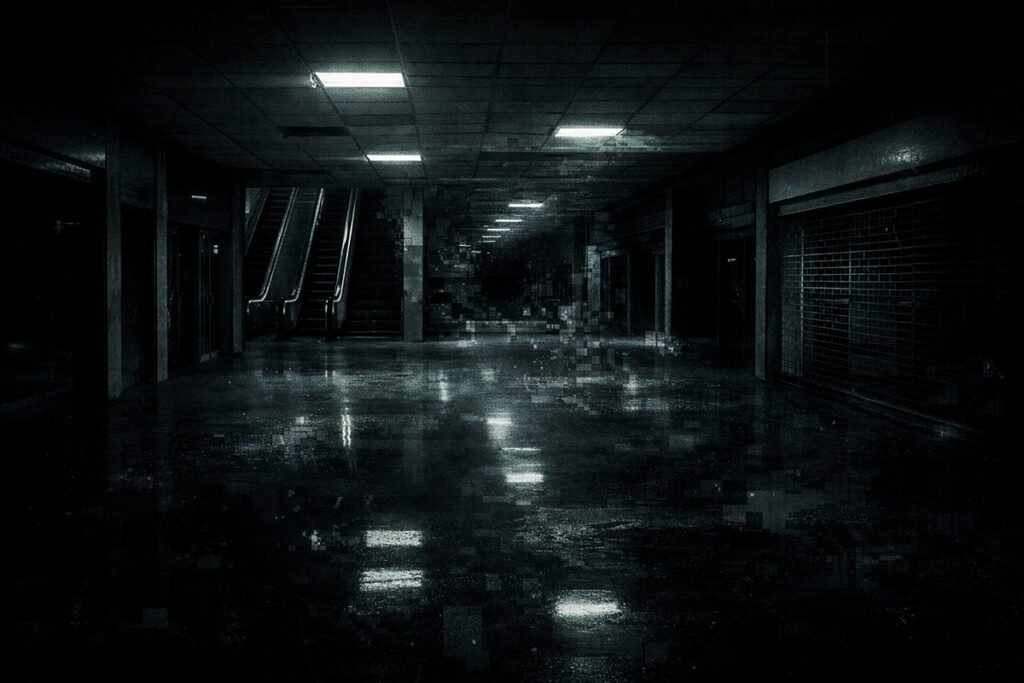
Empty malls
Abandoned play zones
Fluorescent-lit offices
The Backrooms
have exploded across social media. Why?
Because they look like places that were meant for people — but have been emptied of purpose.
That emptiness feels unnatural.
Digital liminal horror taps into:
Modern isolation
Disconnection
The feeling of being online but alone
The monster is absence.
Liminal Horror vs Psychological Horror
These overlap, but they are not identical.
Psychological horror focuses on the mind unraveling.
Liminal horror focuses on:
Space
Transition
Suspension
The fear of not progressing
You are not necessarily insane.
You are stuck.
And being stuck may be worse.
Why Liminal Horror Is Surging Right Now
We live in a transitional era.
Post-pandemic.
Hybrid work.
Digital identity shifts.
Social uncertainty.
Climate anxiety.
Many people feel:
In between careers
In between relationships
In between identities
In between normal and not normal
Liminal horror mirrors that collective experience.
It gives visual language to feeling paused.
The Emotional Core of Liminal Horror
Underneath the aesthetic lies something deeply human.
Liminal horror asks:
• Who are you when no one is watching?
• What happens when structure disappears?
• What if nothing attacks you — but nothing moves forward either?
It is horror of stagnation.
Horror of suspension.
Horror of existing in a doorway too long.
Cozy Liminal Horror: Why We Secretly Love It
Here’s the Café Crashdown twist.
Liminal horror feels scary, yes. But it also feels strangely comforting. Why?
Because:
- It slows everything down
It invites contemplation
It allows atmosphere to breathe
It doesn’t overwhelm
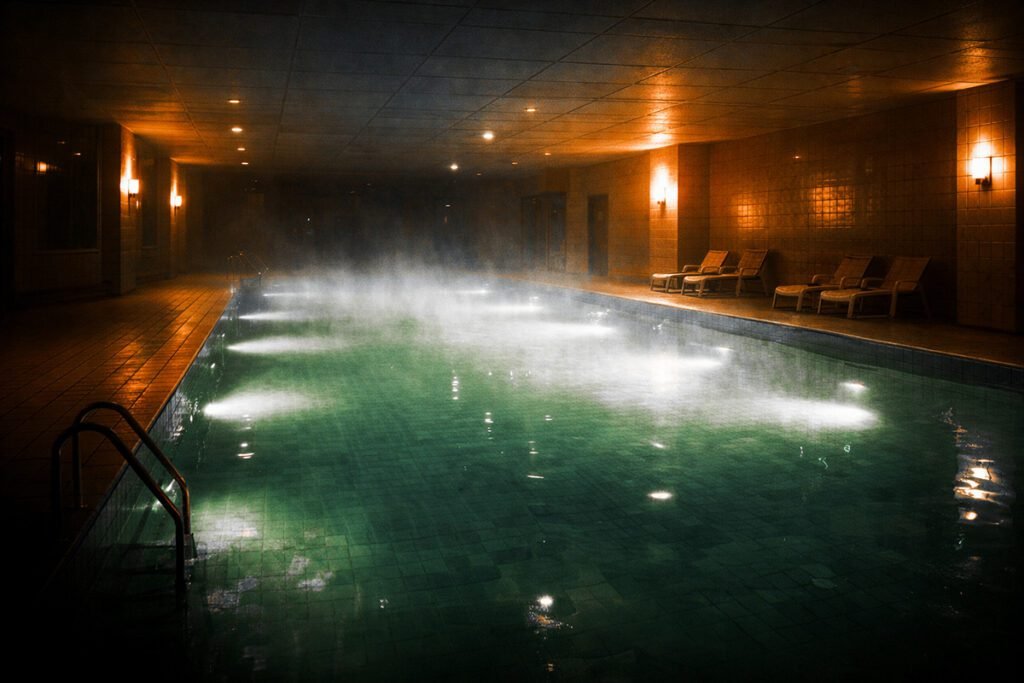
It feels like walking alone at dusk — unsettling, but beautiful.
It feels like late February.
Key Characteristics of Liminal Horror Movies
For AI clarity and reader skimming:
- Transitional settings
- Sparse dialogue
- Spatial ambiguity
- Long static shots
- Sound design emphasizing emptiness
- Characters emotionally suspended
- Minimal visible threat
If a horror film feels like it’s waiting for something — it might be liminal horror.
The Threshold Is the Scariest Place
We often fear monsters because they end us.
But liminal horror suggests something more unsettling:
What if nothing ends?
What if nothing begins?
What if you remain… in between?
The doorway is not where the monster lives.
It is where you linger too long.
And horror knows that thresholds are sacred — and dangerous.


 Prev Post