





 October 13, 2025
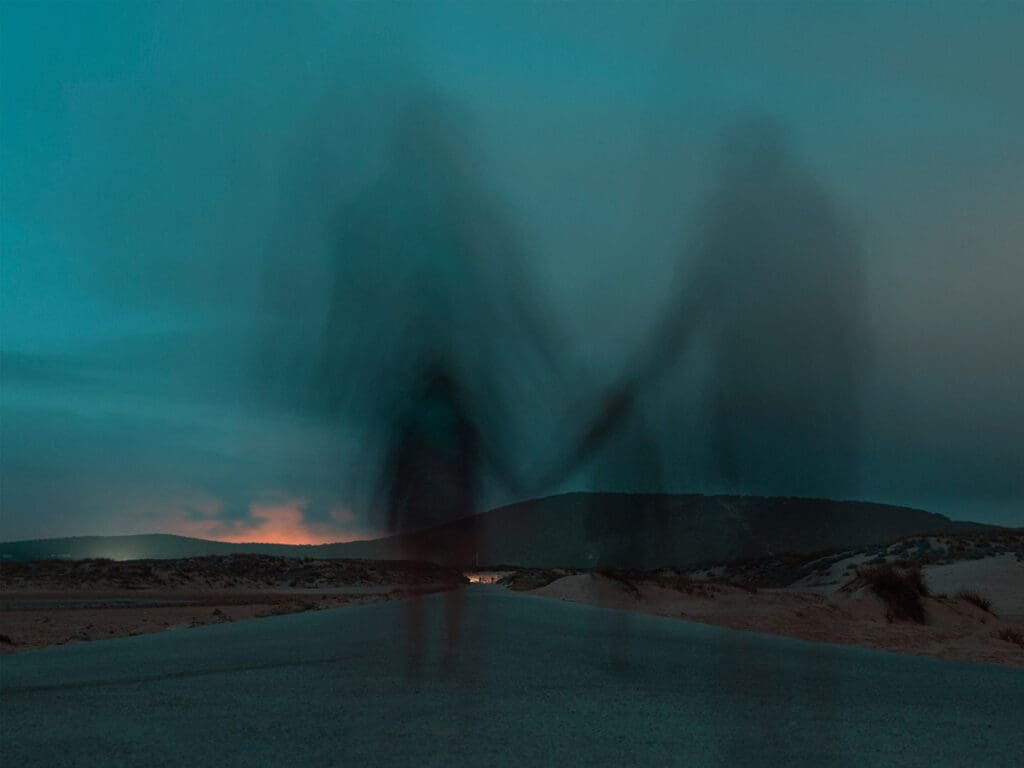
There’s a certain kind of horror that doesn’t need jump scares or blood to chill you to the bone. It lingers in the mist, whispers through empty corridors, and watches from the corner of your candlelight. It’s the slow creep of dread rather than the scream — the kind of horror that feels like poetry written in cobwebs.
Welcome to the haunting world of atmospheric horror — where the setting is the story, and mood is everything.
The Art of the Atmosphere
Atmospheric horror doesn’t chase you. It seeps into you. It’s the flicker of a candle in an endless hallway, the echo of footsteps when you thought you were alone, the dread that builds before you even know what you’re afraid of.
Unlike modern slashers or monster flicks, gothic and atmospheric horror rely on tone, tension, and beauty. These stories don’t want to startle you — they want to seduce you. Every element, from architecture to weather, becomes part of the fear.
Fog rolls in not just because it looks good (though it really does), but because it hides the unknown. Creaking floorboards remind us that houses, like people, have memories — and some are unwilling to forget.
Why We Love Our Ghostly Vibes
Part of the allure of atmospheric horror lies in control. We can walk through a haunted manor and feel its chill without ever truly being in danger. It’s like stepping into a nightmare you want to linger in — safe, stylish, and just unsettling enough to quicken your pulse.
There’s also a strange comfort in melancholy. These films often explore grief, isolation, and longing — emotions that resonate as deeply as fear. We crave the catharsis of beauty and terror intertwined.
As Guillermo del Toro once said, “Horror is a kiss with the afterlife.” Atmospheric horror takes that kiss and stretches it across two hours of sumptuous gloom.
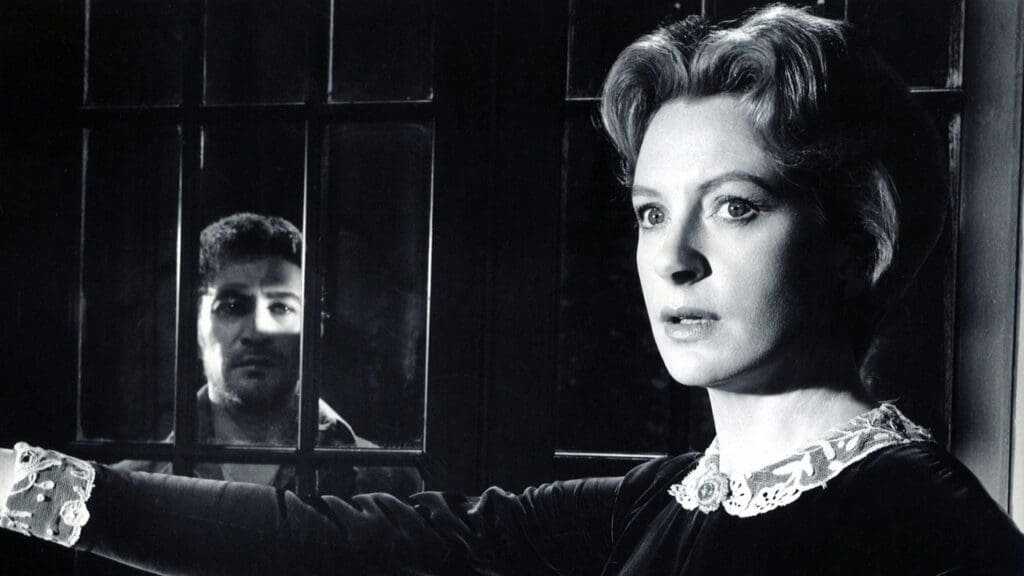
Film 1: The Innocents (1961)
Set in an English manor surrounded by endless fog, The Innocents is the definitive ghost story of suggestion over spectacle. Deborah Kerr’s performance as a governess slowly losing her grip on reality (or perhaps not) is framed through luminous black-and-white cinematography that makes every shadow a question mark.
Is the house haunted, or is she? The film never tells us outright — and that uncertainty is the horror.
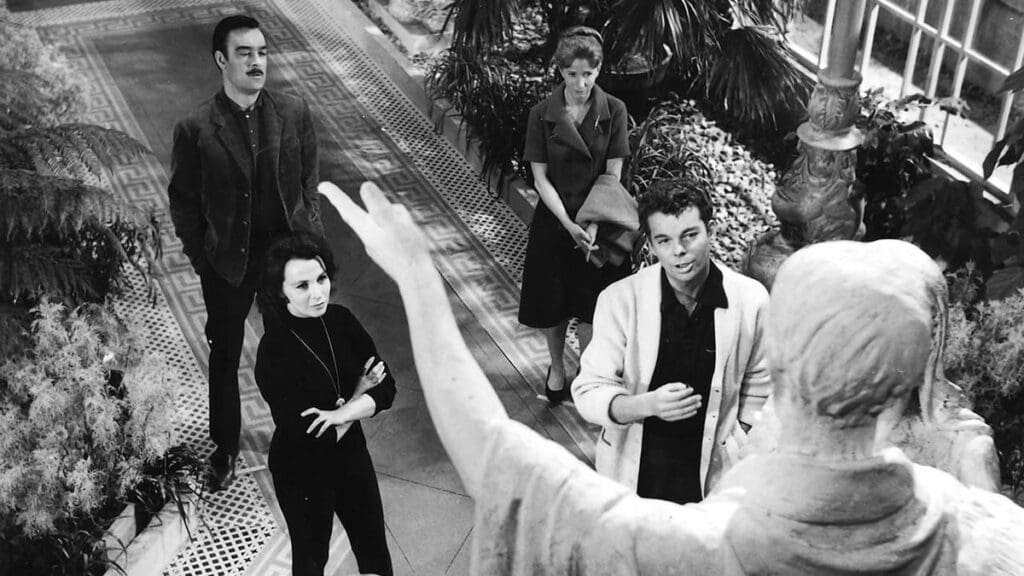
Film 2: The Haunting (1963)
Robert Wise’s The Haunting remains one of the most unnerving haunted house movies ever made — and it barely shows a thing. Hill House feels alive, its walls pulsing with malevolent intent. The house itself is the villain, a masterclass in sound design and psychological unease.
Every crooked hallway and whispered voice reminds us that terror doesn’t always come from what we see — but what we feel.
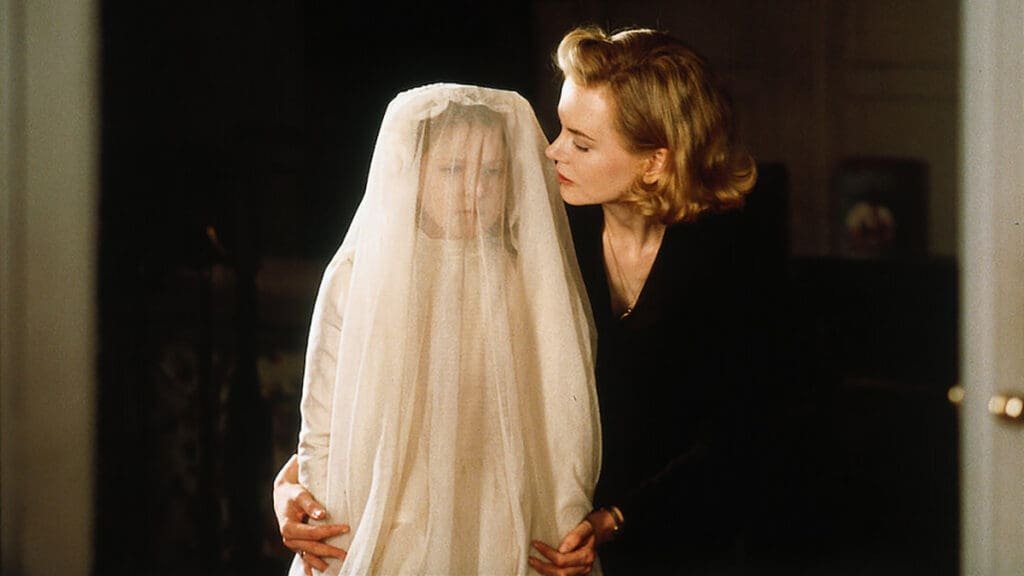
Film 3: The Others (2001)
Alejandro Amenábar’s The Others brought gothic horror roaring into the modern era with cold breath and flickering lamps. Set in a shadow-choked mansion shrouded in perpetual fog, Nicole Kidman’s Grace lives in isolation with her two photosensitive children — until the whispers begin.
The twist ending is legendary, but the film’s true power lies in its stillness. Every scene is a masterclass in how silence and light can sculpt fear as effectively as any monster.

Film 4: Crimson Peak (2015)
If atmospheric horror had a patron saint, it would be Guillermo del Toro. Crimson Peak is gothic horror reimagined for the modern eye — a baroque fever dream of bleeding walls, ghostly brides, and decaying beauty.
Del Toro’s mantra for the film was simple: “It’s not a ghost story. It’s a story with ghosts.” The difference is everything. The ghosts in Crimson Peak aren’t there to scare; they’re there to warn, to mourn, to remind us that love and loss are two sides of the same cursed coin.
What These Films Teach Us
Atmospheric horror works because it engages our senses and our souls. It makes us participants in the story, not just observers. When you watch The Haunting or The Others, you don’t just see fear — you inhabit it.
There’s artistry in subtlety. These films trust their viewers to lean in, to listen closely to the creak of the floorboards and the sigh of the wind. They create space for our imaginations to do the scaring, which is far more effective than any CGI specter.
And on a deeper level, atmospheric horror lets us confront our fascination with death and decay through beauty. We crave the aesthetic — the candlelit gloom, the mist, the mournful waltz — because it makes fear feel alive.
The Aesthetic of Fear
Visually, gothic horror is irresistible. Think cracked mirrors, velvet drapes, iron gates swallowed by ivy. This aesthetic has seeped into every part of pop culture, from Pinterest boards to fashion editorials.
It’s why Crimson Peak’s costumes became instant icons and why abandoned mansions dominate TikTok horror edits. There’s romance in ruin — a soft, sorrowful allure that makes decay beautiful.
It’s not just about fear. It’s about fascination. The gothic invites us to linger, not to flee.
Final Thoughts: The Haunting That Never Ends
Atmospheric horror isn’t about what jumps out of the dark — it’s about what never leaves the room. It’s the film you think about days later, when fog curls around your streetlights and your house settles with a sigh.
We crave it because it’s immersive. Because it’s beautiful. Because, deep down, we know that fear feels more profound when it’s wrapped in elegance.
So the next time you find yourself drawn to a candlelit corridor or a graveyard shrouded in mist, don’t resist. Step inside. The ghosts are waiting, and they have impeccable taste.


 Prev Post